
Can the right fencing ideas protect your yard through Medford’s heat, rain, wind, and freezing weather? Powder-coated steel and steel-reinforced vinyl usually provide the longest service life. Properly maintained cedar also remains a strong, natural choice for Southern Oregon homes.
Medford faces hot summers, winter freeze-thaw cycles, heavy rain, strong wind, and wildfire smoke. These conditions affect material choice, post strength, drainage, and installation. The best fence must suit the property, home style, and local soil.
Allure Landscape Construction serves Medford and Southern Oregon with more than 10 years of hands-on contractor experience. The company is licensed and bonded, and its team can help homeowners compare vinyl, steel, aluminum, cedar, composite boards, concrete footings, and privacy options.
A privacy fence often costs $40 to $150 per linear foot. A smart design balances durability, privacy, appearance, and curb appeal while fitting the home and available space. Call Allure Landscape Construction at 541-292-8824 to discuss your project and request a free estimate.
Key Takeaways
- Powder-coated steel offers excellent weather resistance.
- Reinforced vinyl provides long service with little upkeep.
- Cedar works well when properly sealed and maintained.
- Strong posts and concrete footings support lasting performance.
- Material choice should match the home and property.
- Local weather should guide every installation decision.
What Is the Longest-Lasting Fencing Material for Extreme Weather?
Powder-coated steel is often the longest-lasting fence choice for severe weather. Steel-reinforced vinyl also performs well when low upkeep matters. Ornamental aluminum resists rust, while composite offers a stable, modern option. Cedar remains a trusted material for homeowners who value natural style and easy repairs.
Local conditions and installation quality matter as much as the panels. Strong posts, sound concrete footings, good drainage, and proper spacing help prevent movement and rot. A six-foot privacy fence usually blocks most ground-level views without creating unnecessary height or wind load.
Wood remains popular because crews can install, repair, stain, and customize it in many ways. Cedar suits nearly any home style and works well in a backyard. However, it needs regular sealing to limit moisture damage. Privacy fence costs commonly range from $40 to $150 per linear foot.
- Choose steel for strength and long service life.
- Choose reinforced vinyl for minimal routine care.
- Choose cedar for natural appearance and design flexibility.
- Compare repair needs, budget, service-life goals, and maintenance expectations.
The best option balances weather exposure, appearance, privacy, and budget. Avoid large gaps, weak posts, and poor drainage, since these issues can shorten the life of even premium fences.
Which Medford Weather Conditions Can Damage a Fence?
Medford’s shifting seasons test every outdoor boundary. A fence must handle changing soil, dry air, rain, wind, and smoke while still protecting the yard. These conditions also shape regional outdoor living and garden design.
How freeze-thaw cycles affect posts, footings, and soil
During winter, water enters soil around posts and concrete footings. When it freezes, it expands and pushes the soil outward. Thawing then leaves small voids that can cause movement, leaning, or cracked supports. In Jackson County, drainage and footing depth deserve close attention.
How heat, rain, wind, and wildfire smoke affect fencing materials
Hot Southern Oregon summers can dry and shrink wood. Long rain periods expose rails and ground-contact points to moisture. Strong wind adds pressure to tall privacy sections, gates, metal panels, and unsupported spans. A solid wall needs sturdy posts and balanced spacing.
Wildfire smoke can leave residue on wood, vinyl, and metal. Gentle washing and timely finish care help protect appearance. Jonathan Fargion recommends at least two inches beneath a fence to support wildlife movement between properties. This small clearance can preserve security without closing every natural path.
- Key point: check drainage, soil movement, clearance, and post stability before installation.
| Weather concern | Common effect | Practical response |
|---|---|---|
| Freeze-thaw cycles | Posts shift or footings crack | Use sound concrete and drainage |
| Heat and rain | Wood dries, shrinks, or absorbs moisture | Seal exposed surfaces |
| Wind and smoke | Panels strain and surfaces collect residue | Brace spans and clean finishes |
How Does Vinyl Perform in Southern Oregon Weather?
Seasonal rain makes vinyl a practical choice for a Medford home. This material does not absorb water, so it resists rot, termites, and peeling. It also needs no regular staining or sealing. A quick wash can restore its clean look after dust or smoke residue.
Why vinyl resists rot, insects, and routine maintenance
The Clark Vinyl Privacy Fence comes in 3- to 7-foot heights. It offers full privacy and suits a backyard, garden, or side yard. Solid panels create a steady visual barrier, while picket and semi-privacy options allow more light and airflow.
When steel reinforcement makes vinyl privacy panels stronger
Low maintenance does not mean weak construction. Steel reinforcement inside posts or panels adds rigidity. It also helps support gates and limit wind-related movement. Vinyl posts set in concrete footings provide a sound base when installers align them correctly.
“A durable fence design starts with the support below the surface.”
Before approval, check the color, expansion space, post alignment, and footing depth. Installed costs often range from $15 to $65 per linear foot.
| Vinyl option | Main benefit | Best use |
|---|---|---|
| Solid panels | Full privacy | Backyards and side yards |
| Semi-privacy panels | Light and airflow | Gardens and shared borders |
| Picket sections | Open appearance | Front yards and walkways |
Why Is Powder-Coated Steel a Durable Fencing Choice?
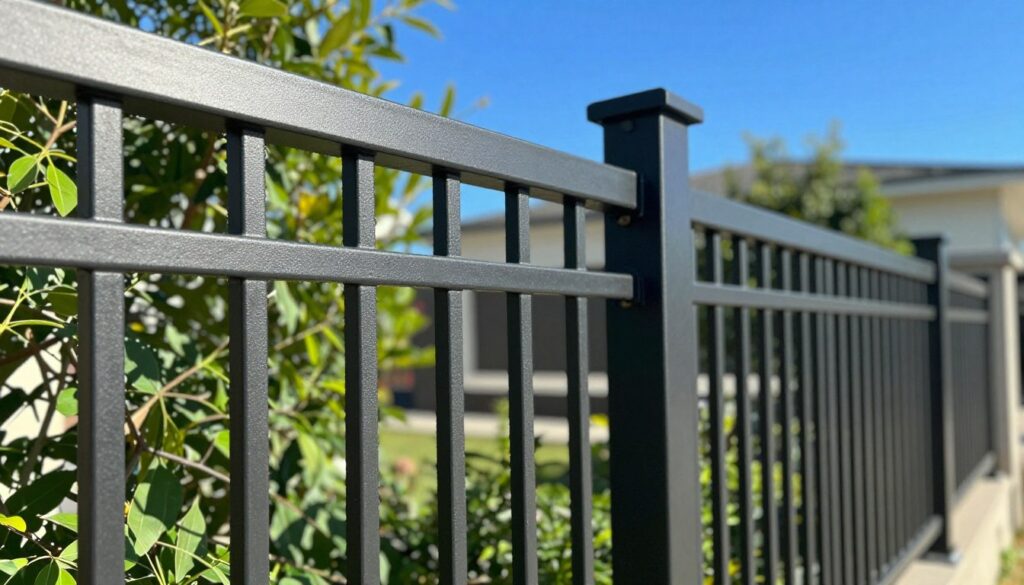
Powder-coated steel stands up well to demanding outdoor exposure. A factory-applied finish creates a barrier against routine moisture and surface corrosion. This durable material needs little care, yet prompt touch-up helps prevent small scratches from spreading.
The Montage Ornamental Fence shows why welded construction matters. Its fully welded panels come in 3- to 6-foot heights. With fewer bolts and brackets, the structure has fewer connections that can loosen. The open design supports security while preserving visibility along a front yard or property line.
For greater privacy, corrugated metal creates a more solid appearance and starts at about $17 per linear foot. Another resilient option pairs Ipe wood slats with steel posts. This combination offers warmth, strength, and modest maintenance.
- Use ornamental steel for visibility and decorative appeal.
- Choose corrugated metal for a stronger privacy screen.
- Set steel posts in properly sized footings.
- Inspect coating damage after storms and repair it quickly.
Strong support remains essential. Well-built fences perform better when crews match post size, footing depth, and layout to wind exposure and soil conditions.
Is Aluminum the Best Low-Maintenance Fence Material?
A clean aluminum boundary can frame a property without adding much upkeep. Ornamental aluminum stays lightweight, durable, and resistant to corrosion in a rain-exposed yard. It will not rust like untreated iron, and occasional washing usually keeps its finish fresh.
How ornamental aluminum balances appearance and corrosion resistance
Aluminum weighs less than steel, so it creates less strain during installation. Steel offers greater mass and impact strength, which may suit windy areas, large gates, or locations that need heavy panel support. Aluminum remains a smart choice when easy handling and low maintenance matter most.
An ornamental picket fence preserves sightlines around landscaping and front-home features. Its open profile supports curb appeal rather than blocking the view. Homeowners can select several designs, colors, and heights from 3 to 6 feet. This variety works with traditional homes and modern properties.
- Choose aluminum for corrosion resistance and simple care.
- Select steel for heavier support and impact protection.
- Use open panels when privacy is not the main goal.
- Compare installed options at about $22–$72 per linear foot.
Aluminum delivers style and lasting visual appeal, but closed vinyl or steel panels provide stronger privacy.
Can Cedar Withstand Medford’s Outdoor Conditions?
Cedar remains a popular choice for Medford privacy projects because it adds natural warmth, easy repairs, and flexible design options. It suits a backyard, garden, or home with a traditional look. Port Orford cedar and Alaskan Yellow cedar resist decay and insects better than many standard wood materials.
Why cedar remains popular for custom outdoor spaces
Homeowners can choose board-on-board, semi-privacy, picket, lattice, trellis, or split-rail designs. Applegate uses cedar around galvanized steel posts. Bainbridge uses overlapping pickets, while Molalla creates a solid privacy wall. Sandy and Trask add a lattice top for air and light. Sauk offers a rustic split-rail style.
How finish care and posts extend service life
Sealing or staining helps manage moisture, ultraviolet exposure, color change, and surface checking during hot summers. Galvanized steel or pressure-treated posts, concrete footings, and ground clearance also reduce decay risk. Kevin Lenhart suggests 12–18 inches of lattice when extra privacy is needed without excessive height.
| Design | Height | Best use |
|---|---|---|
| Applegate semi-privacy | 5–7 feet | Airflow and privacy |
| Molalla board-on-board | 4–8 feet | Complete privacy |
| Sauk split-rail | 4 feet 7 inches | Rustic yards |
When Does Composite Fencing Make Sense for Extreme Weather?
Composite suits homeowners who want a clean, manufactured look with less painting, staining, and routine care. It can work well in a weather-exposed yard when the design includes strong posts, reliable fasteners, and well-sized footings.
Before choosing composite panels, ask how they handle thermal movement. Check color stability, warranty coverage, and replacement-panel availability. Installer experience also matters, since poor support can cause movement even when the material performs well.
Compare its solid privacy profile with vinyl, corrugated metal, and open ornamental options. Vinyl offers low upkeep at about $15–$65 per linear foot installed. Corrugated metal resists mold and rust and starts near $17 per linear foot. A trellis can add height and light for about $400–$2,400.
- Match composite with a garden border or wall for a modern backyard.
- Review materials, fasteners, posts, and drainage before approval.
- Use a lighter design when full privacy feels too heavy.
Explore these composite fence systems before selecting an option.
| Choice | Key strength | Best fit |
|---|---|---|
| Composite | Low routine care | Contemporary privacy |
| Vinyl | Moisture resistance | Simple upkeep |
| Corrugated metal | Mold and rust resistance | Strong visual screen |
| Trellis | Added height and light | Garden accents |
How Do Fence Posts and Footings Determine Longevity?
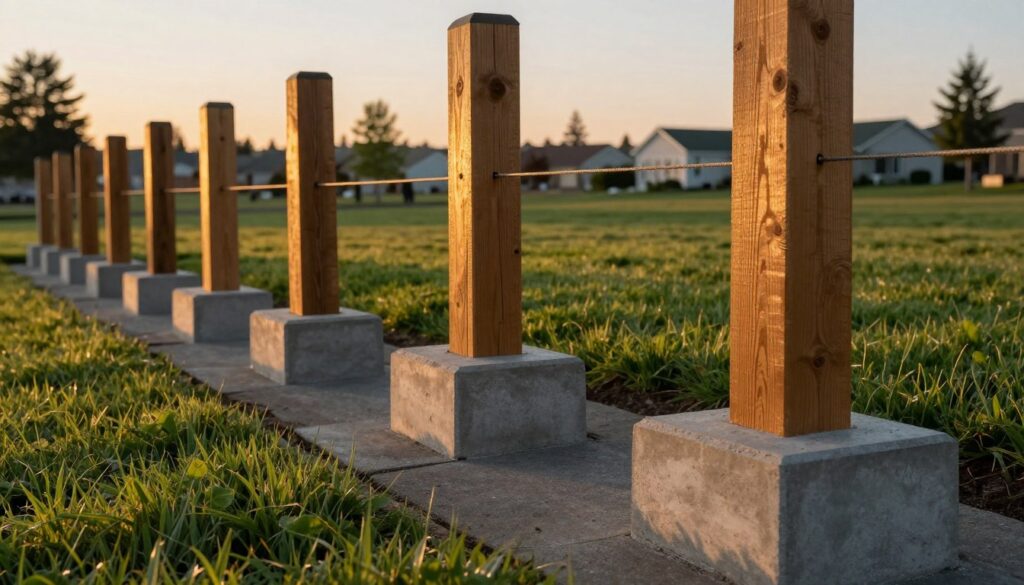
A durable fence begins below the panels. Posts transfer wind and gate loads into the ground, so size, spacing, alignment, and embedment shape long-term performance. Concrete footings add stability when Medford soil shifts through seasonal freeze-thaw cycles.
Why reinforced posts and concrete footings matter
Reinforced posts help solid privacy sections resist movement. The Clark Vinyl Privacy Fence uses concrete footings with optional steel reinforcement. Applegate Cedar Semi-Privacy Fence pairs galvanized steel posts with concrete. Bainbridge, Chelan, Molalla, Silverstar, and Trask styles use pressure-treated or steel supports with concrete bases.
Pressure-treated posts offer practical value. Galvanized steel posts suit exposed runs and gates. Steel-reinforced vinyl adds strength without changing the clean surface. Review the recommended fence post depth before work begins.
How Jackson County soil types influence installation
Jackson County soil can vary by lot, slope, drainage, and fill. A site check reveals unstable ground, access limits, grading changes, and water risks. This point matters because identical fences may need different excavation methods.
Allure Landscape Construction brings more than 10 years of licensed construction experience to each property. Careful planning helps fences stay aligned and secure.
Which Fencing Ideas Best Combine Privacy and Weather Resistance?
The best privacy fence balances solid coverage with airflow and structural strength. A six-foot fence usually blocks most ground-level views. For more privacy without a closed-in look, Kevin Lenhart recommends adding 12–18 inches of lattice.
Board-on-board cedar brings warmth to a backyard and suits many home styles. The Molalla Cedar Board-on-Board Fence reaches 4–8 feet. Steel-reinforced vinyl offers consistent panels, while the Clark Vinyl Privacy Fence spans 3–7 feet. The Pacific Horizontal Fence provides a modern look at 3–8 feet.
- Use shorter sections, reinforced posts, and deep footings to reduce wind strain.
- Choose horizontal panels for a clean design with strong visual appeal.
- Add metal accents or a lattice top to support airflow and security.
- Match wood, vinyl, or mixed materials to the garden and available space.
Good fence design considers weather exposure, height, maintenance, and curb appeal—not appearance alone.
| Material or style | Privacy | Weather considerations | Typical application |
|---|---|---|---|
| Board-on-board cedar | High | Seal wood; use strong posts | Warm backyard wall |
| Reinforced vinyl | High | Resists moisture and rot | Low-care yard |
| Horizontal panels | Medium to high | Limit long spans in wind | Modern home |
| Lattice-top fence | Adjustable | Improves airflow | Garden privacy |
How Do Fence Styles Affect Durability and Curb Appeal?
A fence’s visual pattern can shape how a Southern Oregon property feels and functions. Height, spacing, airflow, and finish all affect privacy, weather exposure, and curb appeal. The right design should complement the home while supporting outdoor living.
Board-on-board and lattice-top privacy fence designs
Board-on-board cedar creates a solid wall for a backyard. The Sandy Cedar Privacy Fence reaches 5–7 feet, while the Trask Lattice Top Privacy Fence spans 3–8 feet. A lattice or trellis top adds light, airflow, and room for climbing plants without losing much privacy.
Horizontal fences, picket fences, and semi-privacy options
The Leavenworth Cedar Horizontal Fence uses varied-width boards at 3–6 feet. The Pacific Horizontal Fence offers semi-private and full-private panels from 3–8 feet. For classic homes, a picket fence creates an open look. Applegate, Lacamas, Lewis, and Pacific semi-privacy styles give neighbors a finished appearance on both sides.
Hog wire, ornamental metal, and split-rail fence applications
Deschutes hog wire pairs steel panels with cedar for gardens. Montage uses powder-coated metal and welded panels for front yards. Sauk’s rough cedar split-rail style suits rural spaces and costs about $15–$25 per linear foot. A picket fence typically costs $10–$75.
Good design lets privacy, visibility, and durability work together.
- Use narrow gaps for screening and wider spacing for airflow.
- Match color and materials to the home and garden.
What Should Medford Homeowners Know About Local Fence Codes?
A code check should come before any posts reach the ground. Medford and Jackson County may apply rules for height, corner visibility, setbacks, easements, and property lines. Confirm the current requirements for your site before approving plans or scheduling work.
A privacy fence near a sidewalk, street, driveway, or corner may face different review than a backyard boundary. Height limits can also vary by location. Kevin Lenhart recommends avoiding extra height when six feet already provides a typical ground-level screen.
Confirm ownership records and survey details before placing posts. Even a small property-line error can lead to removal costs or a dispute. Check for utility corridors and recorded easements as well.
- Review permit needs with the City of Medford or Jackson County.
- Ask how lattice tops and open ornamental fences affect visibility rules.
- Consider Jonathan Fargion’s recommendation: leave at least two inches beneath the fence for wildlife movement.
- Keep the design practical, attractive, and code-aware.
Allure Landscape Construction is licensed and bonded. Its team can help coordinate code-aware construction, while homeowners verify the rules that apply to their property and home.
How Much Does a Long-Lasting Fence Cost?
Budgeting starts with more than the price of materials. Total length, material, height, labor, gates, removal, and site access all shape the final project cost. A national privacy fence benchmark ranges from $40 to $150 per linear foot.
Material, height, labor, and site-access cost factors
Taller panels need stronger posts, larger footings, and added wind-load planning. Steep grades, rocky soil, buried utilities, retaining walls, narrow access, and long carry distances may also raise labor costs. These details can change the estimate for any property.
Homeowners can compare the options below for early planning. The ranges come from national estimates compiled by HomeAdvisor, Angi, Fixr, Fence Gnome, and The Home Depot on May 7, 2024.
- Ask whether demolition, gates, delivery, and permits appear in the quote.
- Compare installed pricing, not material cost alone.
- Request a site review before selecting panels or height.
Allure Landscape Construction can inspect your yard and prepare a free, local estimate.
| Material | Typical cost per linear foot | Common use |
|---|---|---|
| Vinyl or aluminum | $15–$65; $22–$72 | Low-care privacy or open design |
| Treated pine or chain link | $18.50–$46.50; $15–$30 | Practical property boundaries |
| Split rail, picket, or lattice top | $15–$25; $10–$75; $15–$39 | Decorative yard styles |
| Corrugated metal | Starts near $17 | Modern screening |
What Can More Than a Decade of Contractor Experience Reveal?
A decade of jobsite lessons can reveal more than a product label ever will. Allure Landscape Construction has more than 10 years of hands-on contractor experience. That work often exposes the same weak points: undersized posts, shallow footings, poor drainage, and gates that do not align.
Experienced crews study how wood panels, support spacing, soil movement, grade changes, and seasonal weather interact. Cedar systems show this clearly. Pressure-treated or steel supports paired with concrete footings can improve stability and help limit moisture damage. Ipe wood slats mounted to steel supports also offer resilient, low-care performance for many years.
Site conditions shape the work plan, too. Narrow access, existing landscaping, irrigation lines, and neighboring improvements may affect removal, delivery, digging, and repair access. Practical experience helps identify these concerns before they become costly changes.
- Review drainage before selecting materials.
- Plan gate alignment with the finished grade.
- Allow room for seasonal movement and future upkeep.
“Installation details can matter as much as material selection.”
Allure provides practical recommendations, not promises of maintenance-free performance. Every property needs a plan suited to its soil, exposure, and daily use.
How Can Licensed and Bonded Installation Protect Your Project?
Professional oversight gives Medford homeowners a clearer path from design approval to final inspection. Allure Landscape Construction is licensed and bonded. This status supports written contracts, defined workmanship standards, and stronger accountability if questions arise.
Why proper permitting and code-aware construction matter
Permits and local rules may affect height, property lines, street visibility, easements, and neighborhood standards. Code-aware planning helps prevent costly changes after installation. It also supports safer sightlines near driveways and corners.
Structural planning matters just as much. Crews should match concrete footings and posts to soil conditions, wind exposure, gate weight, panel size, and seasonal movement. The Montage Ornamental Fence uses fully welded metal panels, while many other designs rely on pressure-treated or steel supports.
Experienced installation helps limit leaning supports, uneven sections, loose hardware, and drainage damage. Homeowners should document material grades, heights, gate hardware, finish details, permit records, and property approvals. Clear records protect expectations and simplify future repairs.
| Project detail | Protection provided | What to document |
|---|---|---|
| Permits | Supports local compliance | Approval numbers and conditions |
| Structure | Improves stability | Footing size and support type |
| Materials | Clarifies quality standards | Panel height and finish |
| Gates | Supports daily security | Hardware and access points |
How Can Allure Landscape Construction Help Choose the Right Fence?
Allure Landscape Construction helps Medford homeowners turn a property goal into a practical outdoor plan. Its licensed and bonded team serves Medford and Southern Oregon with more than 10 years of hands-on contractor experience.
During a consultation, the team reviews the home’s architecture, yard layout, garden areas, drainage, property lines, access, and preferred maintenance level. This process helps narrow privacy, ornamental, cedar, vinyl, steel, aluminum, composite, and mixed-material options.
Allure can refine the design around height, panel spacing, gates, colors, materials, and trellis details. The final style should support outdoor living, match nearby homes, and create the right look without adding unnecessary upkeep. Careful planning also reveals risks that could lead to costly repairs or redesigns.
- Compare materials and privacy needs.
- Coordinate the layout with the home and landscape.
- Plan gates, drainage, and access points.
- Choose a lasting fencing solution for the property.
Ready to review your project ideas? Call Allure Landscape Construction at 541-292-8824 to discuss your choice and book a free estimate for a privacy fence or custom fence design.
Conclusion
A durable boundary begins with more than a panel choice. Powder-coated steel and steel-reinforced vinyl offer strong, low-care protection. Sealed cedar adds natural warmth and flexible style when maintained well.
Posts, concrete footings, drainage, soil review, and code-aware installation help a fence perform through many seasons. These details support stability and reduce costly corrections.
Board-on-board, horizontal, picket fence, lattice, hog wire, ornamental, and split-rail styles serve different privacy and appearance goals. Match height, panel openness, color, and material to the home, yard, backyard, and garden. Wood can soften the look, while a thoughtful design adds appeal.
Explore this guide to fencing ideas before choosing finishes or trellis details. Call Allure Landscape Construction at 541-292-8824 to book a free estimate with a licensed and bonded Southern Oregon contractor.
One Response