
How do smokeless fire pits work? They reduce visible smoke by creating a hotter burn and sending leftover gases through secondary combustion. This process does not remove every emission, but it can create a cleaner, more comfortable outdoor experience when fuel, airflow, weather, and operation are managed with care.
Popular Mechanics testing found that leading models reduced visible smoke by about 80% compared with a traditional campfire. Results still vary with wood moisture, wind, fuel size, and burn control.
For Medford homeowners, this guide offers a practical path to evaluating a patio upgrade or permanent outdoor living feature. It explains airflow, fuel selection, weather limits, placement needs, and real-world testing.
Allure Landscape Construction serves Medford and Southern Oregon. With more than 10 years of hands-on contractor experience, the team brings local insight to outdoor projects, from early planning to installation. Even a compact unit on a cart needs a safe location and proper clearance.
Key Takeaways
- Hotter combustion helps limit visible smoke.
- Wood moisture strongly affects results.
- Wind and burn size can change performance.
- Proper clearance supports safer outdoor use.
- Testing reveals more than product claims.
- Local installation advice can improve patio planning.
How Do Smokeless Fire Pits Work? A Direct Answer
A vented chamber adds oxygen and reheats unburned gases, giving smoke a second chance to ignite before it escapes. This two-stage burn creates brighter flames and less visible residue than many open designs.
“Smokeless” means reduced visible smoke, not zero emissions. Wood still releases gases, fine particles, and odor. Results depend on dry fuel, steady airflow, and proper operation. The core design appears across Solo Stove, Breeo, and Cuisinart models, according to Popular Mechanics.
Why Less Visible Smoke Does Not Mean Zero Emissions
Primary combustion starts when fuel burns in the lower chamber. Rising gases then meet heated air near the upper walls. During secondary combustion, heat helps ignite soot and leftover vapors. This cleaner burn can limit the cloud seen above the unit, but it cannot make wood combustion emission-free.
How Heated Gases Support a Cleaner Burn
Ash & Ember explained this principle in an article published November 18, 2024. Its homeowner-friendly message is simple: improved combustion reduces visible smoke, while no wood-burning system removes every exhaust product.
| Stage | What Happens | Visible Result |
|---|---|---|
| Primary burn | Fuel releases heat and gases | Initial flames and smoke |
| Heated airflow | Oxygen reaches rising vapors | Hotter upper chamber |
| Secondary burn | Unburned gases ignite again | Less visible smoke |
What Causes Smoke in a Traditional Fire Pit?
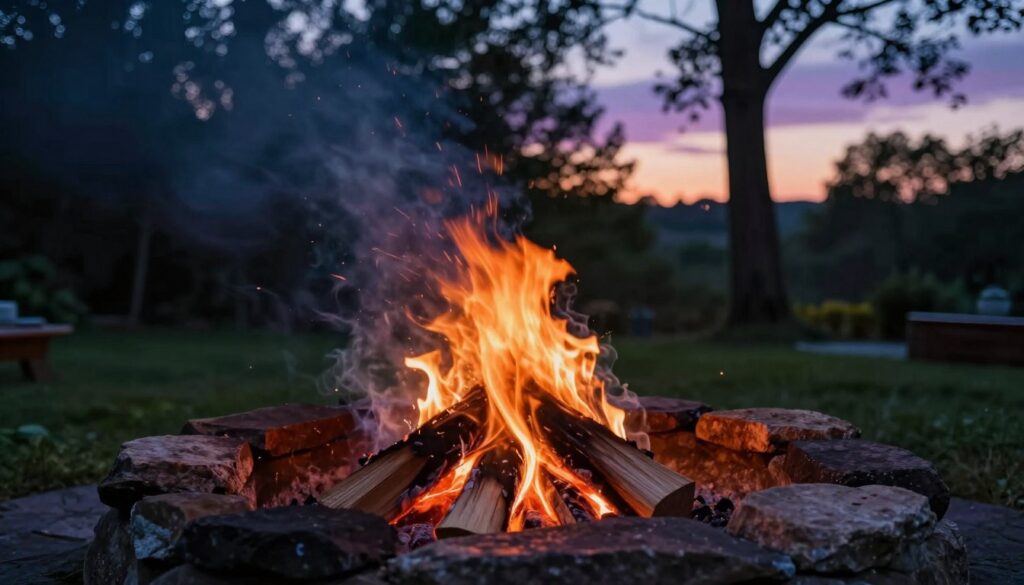
Smoke often signals that fuel is releasing gases faster than the flame can burn them. In an open setup, moisture and unburned particles rise together. This creates soot, odor, and a hazy plume.
How Moisture and Incomplete Combustion Create Smoke
Wet wood uses heat to evaporate water instead of building a hot flame. The result is a slow burn with more visible smoke. Wood covered with leaves, grass, or other vegetation can produce the same effect.
Medford homeowners should choose seasoned firewood stored for six months or longer. Keep logs raised from damp ground and covered on top, while allowing air to move around them. This preparation matters during wet Southern Oregon winters.
Wind can carry fine particles toward a seating area. Watery eyes, coughing, and a sharp odor can quickly make outdoor gatherings less pleasant. A controlled, oxygen-rich design gives gases more heat and air before they escape. The secondary-combustion process helps limit that visible residue.
For cleaner results, use dry fuel, stable logs, and a steady flame. These simple steps help both traditional fire pits and smokeless fire pits perform more consistently.
How Do Airflow and Double Walls Improve Combustion?
Airflow directs heat and gases through a planned path, giving the fuel a steadier burn. This design helps a smokeless fire pit manage heat instead of letting logs smolder in restricted air. Good installation also keeps seating areas, walls, and plants at safer distances in a Medford yard.
Bottom Vents Supply Oxygen
Many smokeless fire pits use an elevated, perforated base. Openings beneath the wood draw oxygen upward and support a hotter, more even flame. Dakota’s underground draft layout uses a primary opening about one foot deep and a second opening less than one foot away, positioned against the wind. The elevated approach achieves a similar draft without cutting into a patio.
Double-Wall Chambers Preheat Air
A double-wall chamber creates a passage around the inner wall. Heat from the flames warms incoming air before it reaches the rim. This preheated stream strengthens combustion and supports steady heat output.
Top Vents Ignite Rising Smoke
Top vents release hot, pressurized air into rising gases. That contact can ignite leftover particles through secondary combustion. Efficient wood-burning systems may exceed 500°C, yet fuel moisture, size, wind, and setup change actual results. Careful placement helps Medford homeowners manage radiant heat during outdoor living projects.
What Does Real-World Smokeless Fire Pit Testing Reveal?
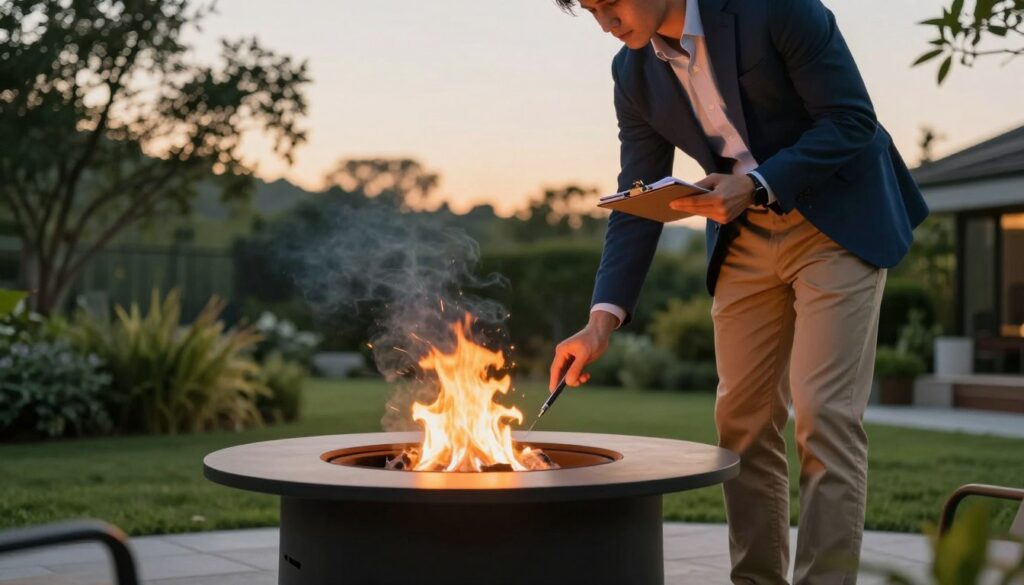
Backyard testing often shows a wider range of results than product claims suggest. Popular Mechanics, with Reviews Editor Danny Perez, reported that leading smokeless fire pits cut visible smoke by about 80% against a traditional campfire. Treat that figure as a useful reference, not a guarantee.
Comparing Smoke With a Traditional Fire Pit
Use equal loads of seasoned wood in both units. Record ignition time, visible smoke, heat, ash, and fuel use. Note eye irritation and the plume near the seating area. This simple test shows whether a model creates less smoke in your yard.
| Test factor | Controlled approach | What to note |
|---|---|---|
| Fuel | Same species, size, and amount | Flames and burn time |
| Airflow | Place both units in similar wind | Smoke direction and intensity |
| Cleanup | Weigh or compare ash after cooling | Residue and fuel use |
Variables That Change Results
Wet wood, vegetation, large loads, and poor airflow raise smoke particles. Dry logs support hotter combustion and secondary combustion. Efficient vents may also require more frequent additions of logs or pellets. Allure Landscape Construction uses project-based experience to help Medford homeowners assess placement, fuel needs, and outdoor comfort before choosing among smokeless fire pits.
What Fuel Burns Best in a Smokeless Fire Pit?
Clean, dry fuel gives a smokeless fire pit its best chance to produce steady heat with less visible smoke. Choose seasoned wood that has dried for six months or longer. Lower moisture supports faster ignition, hotter combustion, and a more even burn.
Use split logs that fit the unit’s design. An oversized load can restrict air and create excess smoke. Efficient airflow may also consume fuel quickly, so add a measured amount instead of filling the chamber to the rim.
“The cleanest outdoor burn begins with the right fuel.”
Some smokeless fire pits accept pellets or charcoal, while others use logs only. Pellets usually contain less moisture and offer a consistent burn, but Ash & Ember notes that they may cost more than ordinary firewood over time. Charcoal suits models that list it as an approved option.
Never add painted, treated, contaminated, or vegetation-covered material. Those products can release unwanted emissions and harm the chamber. Check the manufacturer’s fuel list before lighting your unit, especially if it sits on a cart.
How Does Medford Weather Affect Smokeless Fire Pit Performance?
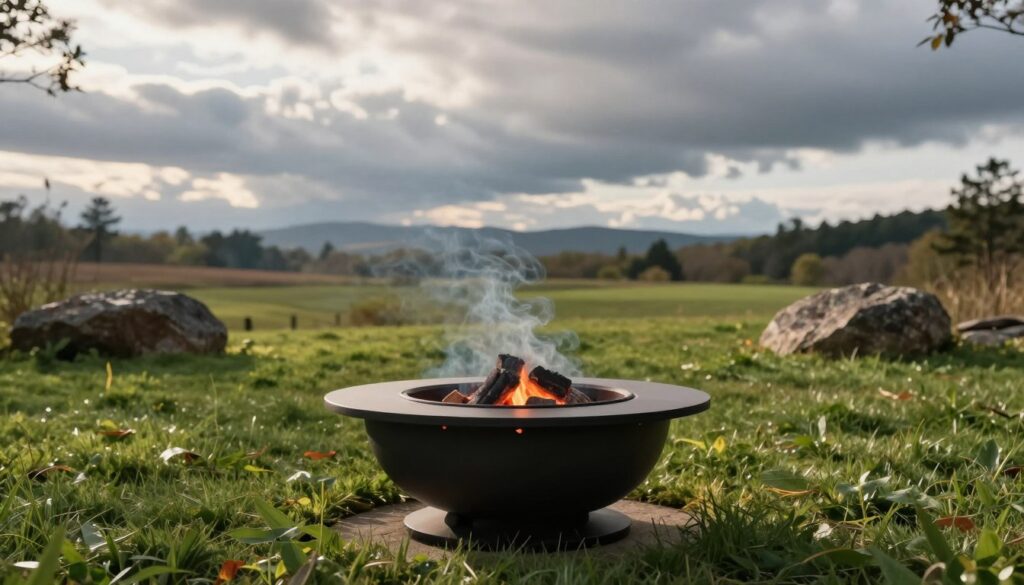
Medford weather can shape outdoor comfort long after installation. Seasonal rain, cold evenings, and shifting ground conditions all influence a unit’s performance. Good fuel storage and a stable base protect both safety and long-term value.
Why Seasoned Firewood Matters in Southern Oregon
Southern Oregon’s wetter months make covered, elevated storage essential. Keep seasoned wood off the soil and shielded from rain while leaving space for airflow. Wood dried for six months or longer lights faster and produces less smoke.
Damp fuel needs extra heat to release moisture. That delay can create uneven flames and more visible emissions during cool evening gatherings. A smokeless fire still depends on dry fuel and steady airflow. For additional testing context, review USDA smoke research.
How Freeze-Thaw Cycles and Jackson County Soils Affect Fire Pit Bases
Freeze-thaw cycles may shift a poorly prepared base, causing settlement or an uneven surface. Jackson County soil types vary, so drainage, compaction, aggregate depth, and surface strength deserve review before construction.
Allure Landscape Construction serves Medford and Southern Oregon. With more than 10 years of local contractor experience, the team can help plan durable outdoor living areas and select suitable smokeless fire pits for regional conditions.
What Should Medford Homeowners Know About Fire Pit Design and Installation?
Before choosing a backyard feature, review local rules and the needs of the site. A smokeless fire pit should suit the patio, not limit safe movement or create heat near the home.
How Local Building Codes and Safe Clearances Guide Placement
Verify Medford and Jackson County safety requirements before installation. Check manufacturer clearances, overhead restrictions, fuel limits, and placement rules. Keep the unit away from siding, fences, branches, and other combustible materials.
Good design also considers seating flow, prevailing wind, drainage, and the direction of heat and smoke. Stable, noncombustible materials can protect the patio surface. A compact model on a cart still needs a level, properly compacted base.
- Review code requirements and product instructions.
- Use durable materials around the installation.
- Plan drainage for local soil conditions.
Why Licensed and Bonded Contractor Experience Matters for Outdoor Living Projects
Jackson County soils may affect drainage, compaction, and settlement. Allure Landscape Construction is licensed and bonded, with more than 10 years of hands-on experience. The team serves Medford and Southern Oregon and can coordinate patios, retaining elements, and outdoor living features.
Request a free estimate by calling 541-292-8824.
Conclusion
A smokeless fire pit reduces visible smoke through oxygen-rich airflow, heated double walls, and secondary combustion. It limits emissions, but it does not remove them.
For a concise secondary-combustion guide, review the design before buying. Seasoned wood, dried for six months or longer, supports less smoke than wet wood, vegetation, or an overloaded fuel bed.
- Are these units completely smokeless?
- No. Wood burning can still create odor, gases, and occasional smoke.
- Is special fuel required?
- Usually not. Use dry wood; pellets or charcoal need manufacturer approval.
- Can Medford homeowners place one anywhere?
- No. Local rules, clearances, drainage, stable surfaces, weather, and combustibles matter.
- Who can plan the area?
- Allure Landscape Construction is licensed, bonded, and serves Southern Oregon.
Call Allure Landscape Construction at 541-292-8824 to book your free estimate. Create a durable, code-conscious outdoor living space with local guidance.
FAQ
What makes a smokeless fire pit produce less visible smoke?
Are smokeless fire pits completely free of emissions?
What causes smoke in a traditional fire pit?
What role do bottom vents play in combustion?
Why do double walls improve performance?
What is secondary combustion?
What does real-world testing reveal about low-smoke outdoor units?
Which fuel burns best in a low-smoke unit?
Can weather in Medford affect performance?
How should a base account for Medford soil and seasonal changes?
What should homeowners check before installing an outdoor unit?
Why hire a licensed and bonded contractor for an outdoor living project?
How Long Do Paver Patios Last Compared to Concrete and Decking?