
A gazebo has a fully enclosed roof, while a pergola uses open beams and a pavilion covers a wide gathering area with posts. These forms support different Medford goals, from dependable shelter and filtered shade to flexible space for meals, guests, and year-round living.
Could the right structure change how your backyard feels—or cost more than needed? This guide compares outdoor gazebos, pergolas, and pavilions to help you choose the right style.
Allure Landscape Construction serves Medford and Southern Oregon with more than 10 years of hands-on contractor experience. The licensed and bonded team helps plan foundations, drainage, structural details, and local requirements for reliable outdoor living.
We also review materials, dimensions, privacy options, and long-term performance. Yardistry advertises closeout discounts of up to 50 percent, but a sale price should not outweigh quality. Compare each sale listing with your needs before investing.
Key Takeaways
- Outdoor gazebos offer stronger shelter.
- Pergola beams filter sunlight.
- Pavilions suit larger gatherings.
- Planning supports safe, lasting results.
- Compare value beyond the sale price.
What Is the Quick Difference Between a Gazebo, Pergola, and Pavilion?
The best choice depends on how much coverage, airflow, and room you need. Each structure creates a different setting for shade, meals, guests, or quiet backyard living.
How Roof Design Changes Shade, Shelter, and Outdoor Comfort
A pergola uses open slatted beams, so sunlight passes through and air moves freely. A gazebo has a complete roof for stronger shelter from rain and bright sun. A pavilion offers broad overhead cover with open sides, which supports airflow and larger gatherings.
For Medford’s warm summers and wet seasons, a hardtop gazebo can provide dependable comfort. A steel roof needs little upkeep, while a timber option adds natural style. A pergola may suit a patio or garden when filtered shade matters most.
Which Structure Best Fits Medford Backyard Living?
An 8 x 8 or 10 x 10 gazebo generally fits reading, relaxing, or small seating. A 12 x 16 structure or larger gives more space for dining, entertaining, or hot-tub coverage. A hardtop gazebo may also complement a pool or existing backyard layout.
Yardistry reports that quality wood gazebos often cost $2,000 to more than $10,000. A sale can lower the product price, but site work and installation vary. Compare the sale value with your intended use.
| Structure | Best fit | Coverage |
|---|---|---|
| Pergola | Patio seating | Filtered shade |
| Gazebo | Relaxing | Complete shelter |
| Pavilion | Dining and events | Broad overhead cover |
What Makes Outdoor Gazebos Different From Other Outdoor Structures?
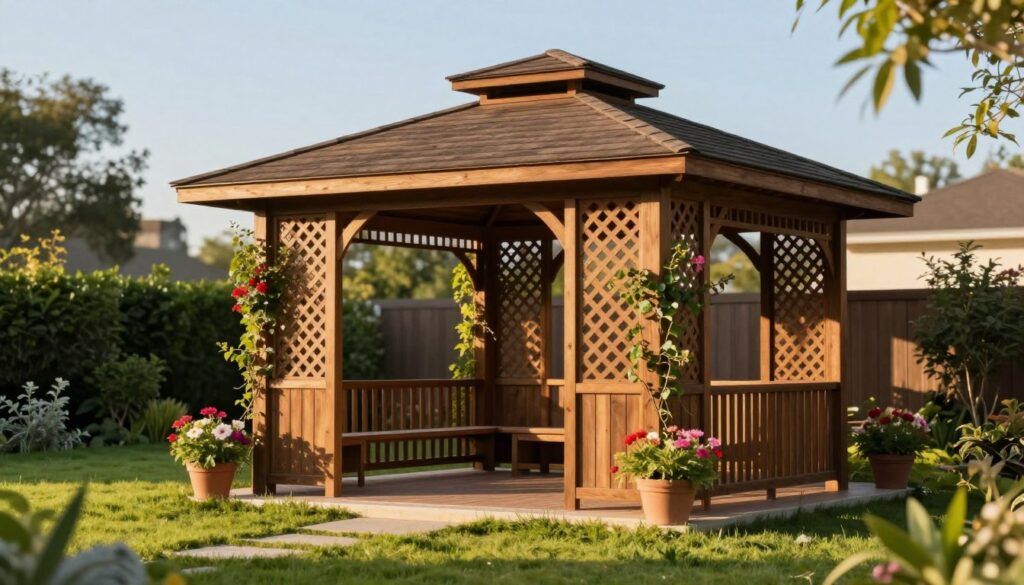
Complete coverage gives a gazebo a more protected backyard retreat. Enclosed sides and a solid roof help block sun, rain, wind, and falling debris. This makes the structure useful for quiet mornings, meals, and evening gatherings.
How Enclosed Roofs Create a Protected Backyard Retreat
A hardtop gazebo offers steady coverage, while a steel roof needs little routine care. A wood gazebo brings warmth and classic design. Add mosquito netting to reduce pests, and use curtains to soften sunlight and improve privacy.
“Keep open flames at least 36 inches from wood surfaces.”
Why Gazebo Size, Netting, Curtains, and Privacy Features Matter
Plan furniture, walking paths, and storage before choosing a backyard gazebo. A hardtop gazebo should leave room for seating, lighting, a ceiling fan, or screens. Curtains and netting can also make summer evenings more comfortable. A grill gazebo requires extra care around heat, roof drainage, and structural connections.
- Measure the footprint and circulation space.
- Place accessories without blocking drainage.
- Keep heat sources away from wood surfaces.
| Feature | Primary benefit | Planning point |
|---|---|---|
| Complete roof | Rain and sun protection | Check drainage |
| Netting | Fewer insects | Allow clear entry |
| Curtains | Shade and privacy | Secure in wind |
When Is a Pergola the Better Choice for a Patio or Garden?
Choose a pergola when your patio should feel connected to the garden, not sealed from it. Its open-beam design filters sunlight, supports airflow, and creates a relaxed living zone beside a walkway, garden bed, or cooking area.
Unlike a gazebo, a pergola does not provide a complete roof. Roofed gazebos offer stronger rain protection, while a pergola delivers partial shade and clear views of Southern Oregon landscaping. This makes it a smart use of space when brightness and openness matter most.
Wood, especially cedar, brings warmth and natural resistance to rot, insects, and decay. Metal supports a cleaner design and can carry climbing plants, curtains, privacy screens, or retractable shade. A ceiling fan may also improve comfort beneath the beams.
A hardtop gazebo suits homeowners who need full cover, but a pergola keeps a small space visually open. Professional installation helps align posts, footings, drainage transitions, and patio connections. Review each sale price and sale listing carefully; lower cost should not replace sound construction.
| Priority | Pergola advantage | Best planning choice |
|---|---|---|
| Filtered sunlight | Partial shade | Open slatted beams |
| Privacy | Flexible screening | Curtains or climbing plants |
| Rain protection | Limited coverage | Choose a roofed structure |
Why Choose a Pavilion for Large-Scale Outdoor Living?
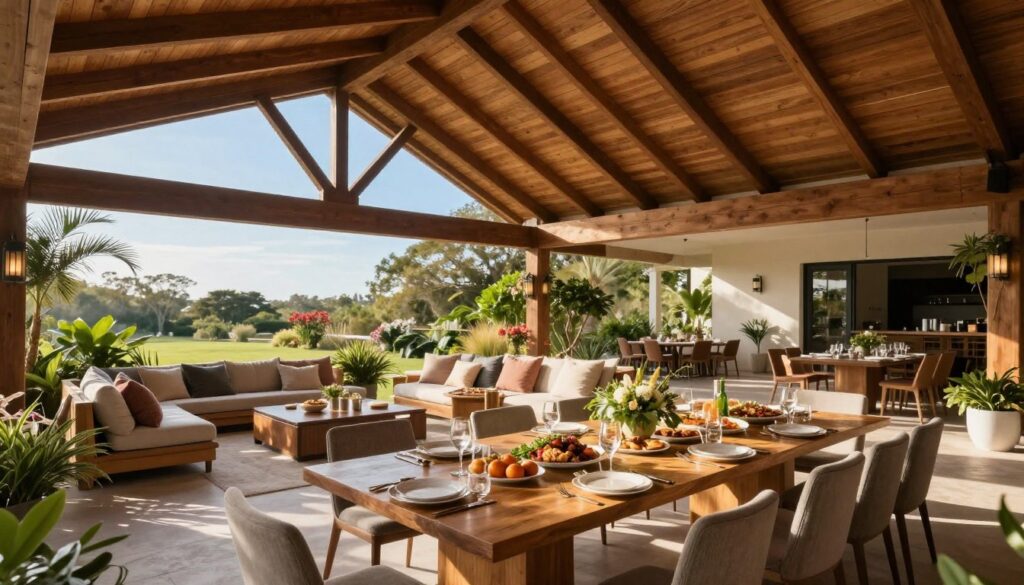
A pavilion earns its footprint when family meals, guests, and daily relaxation need one flexible setting. Its broad cover and open sides create an inviting outdoor living area without closing off the backyard.
How Open-Sided Pavilions Support Dining and Entertaining
Open sides allow easy movement between a patio, lawn, pool, or outdoor kitchen. Arrange a dining table near the center, then add sofas, games, and serving stations along the edges. Curtains can provide privacy, while thoughtful placement protects sightlines and walking paths.
Yardistry recommends a 12 x 16 structure or larger for dining, entertaining, or hot-tub coverage. This scale gives guests room to move. Smaller gazebos suit intimate seating, while pergolas offer more shade and visual openness. SUNJOY also presents gazebos as useful settings for family gatherings and BBQs.
Choose a hardtop gazebo, wood gazebo, or pavilion based on maintenance and style. A steel roof and metal frame need little care. For a grill gazebo, keep flames at least 36 inches from wood surfaces. Compare each sale price and sale offer with installation needs, drainage, and the items you plan to use.
| Priority | Pavilion advantage | Planning focus |
|---|---|---|
| Dining | Room for larger groups | Allow chair clearance |
| Entertaining | Open access on each side | Protect circulation |
| Daily living | Flexible covered space | Plan furniture and lighting |
How Do Gazebos, Pergolas, and Pavilions Compare?
Roof shape, material, and intended use should guide your purchase. A quick comparison can reveal which structure fits your Medford property, budget, and style.
Structure, Roof Coverage, Materials, and Typical Uses
A pergola provides partial shade through open beams. A gazebo has full roof coverage, while a pavilion creates a large, open-sided area for dining and entertaining. For more detail, review this structure comparison.
Wood, Cedar, Aluminum, and Galvanized Steel Options
Cedar wood adds warmth and naturally resists rot, insects, and decay. Yardistry pairs cedar wood with an aluminum roof for a premium balance of natural appeal and durability. Powder-coated aluminum and steel frames resist harsh rain and sun. Galvanized steel also resists rust and corrosion, with low maintenance needs.
Wind, Snow, Durability, and Maintenance Considerations
Backyard Discovery reports testing for winds up to 100 mph when properly anchored. Selected models support roof loads up to 50 pounds per square foot. These are manufacturer ratings, not site-specific guarantees. Foundations, drainage, snow, and wind exposure still require professional review.
| Option | Coverage | Best use | Maintenance |
|---|---|---|---|
| Pergola | Partial shade | Patio living | Inspect beams |
| Gazebo | Full roof | Protected seating | Check roof and frame |
| Pavilion | Wide open cover | Large gatherings | Monitor posts and drainage |
What Should Medford Homeowners Consider Before Installation?
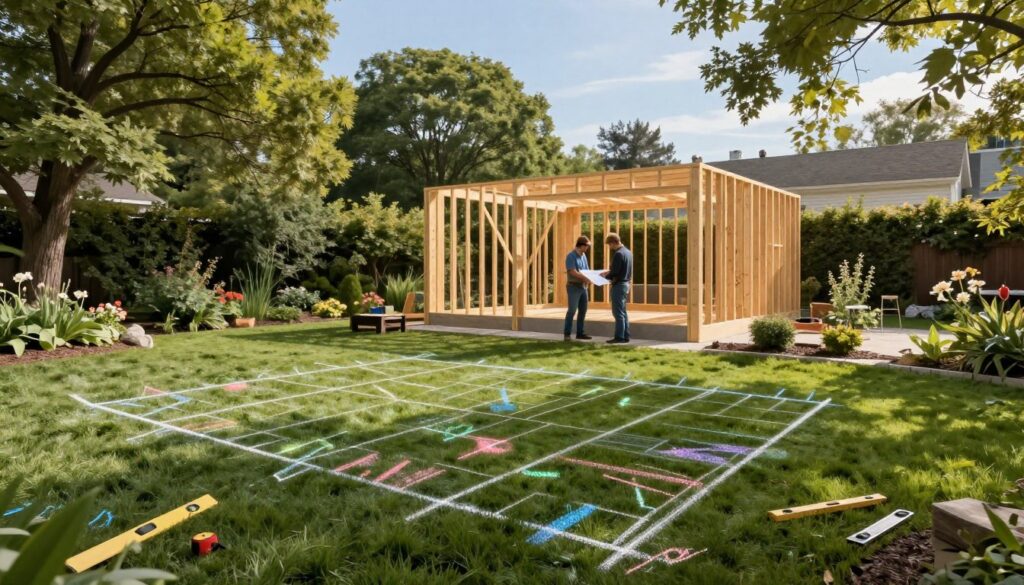
Before choosing a gazebo, review the site, weather, and local rules. Medford has wet winters, dry summers, occasional snow, and freeze-thaw cycles. These conditions can shift concrete, affect drainage, and influence footing depth and anchoring.
How Southern Oregon Weather and Freeze-Thaw Cycles Affect Foundations
A proper foundation helps protect the frame during wind and seasonal movement. Backyard Discovery notes that correct anchoring affects wind and snow ratings. Its guidance also recommends expert evaluation before attaching a structure to a deck, since the deck must support added loads.
How Jackson County Soil Types and Local Building Codes Influence Planning
Jackson County properties may have gravelly ground, poor drainage, expansive soil, or changing slopes. A site review should guide posts, concrete, roof drainage, and access. Confirm setbacks, lot coverage, electrical work, and permits with the local building department. Yardistry states that requirements vary by location.
- Check soil and water flow before digging.
- Match foundation design to the structure’s size.
- Use Allure Landscape Construction’s licensed and bonded team to coordinate code planning and living space improvements.
“We recommend that you consult with a professional.”
How Does Professional Installation Improve Long-Term Performance?
Reliable results depend on more than a good product. Professional installation connects the structure, site, and drainage plan. This support helps protect your living space through Southern Oregon weather and daily use.
Why Licensed and Bonded Contractors Matter for Structural Work
A licensed and bonded contractor brings accountability to layout, footing preparation, anchoring, roof assembly, and structural connections. Careful work can reduce alignment errors, loose hardware, water intrusion, early corrosion, and movement.
Backyard Discovery provides BILT three-dimensional instructions, which can guide product assembly. However, instructions cannot judge soil, slopes, access, or drainage at your home. A professional can adapt a hardtop gazebo, aluminum frame, steel roof, or galvanized steel parts to the site.
What Allure Landscape Construction’s Decade of Hands-On Experience Adds
Allure Landscape Construction has more than 10 years of hands-on experience and remains licensed and bonded. Its local service helps homeowners plan backyard gazebos, custom structures, and connected patios with sound anchoring.
Before a sale purchase, review the five-year limited warranty, maintenance needs, manufacturer requirements, and available service. Backyard Discovery bases consumer service in Pittsburg, Kansas. Galvanized steel and steel components still need proper care. That is one sort of value professional installation adds.
How Can Allure Landscape Construction Design Your Outdoor Living Space?
Every successful backyard project starts with how you plan to live in it. Allure Landscape Construction measures the yard, reviews drainage, and studies access before shaping the design. With more than 10 years of hands-on service in Medford and Southern Oregon, the team helps create a practical, inviting living space.
What Could a Real Medford Project Include?
A compact gazebo can form a quiet retreat beside a patio. A pergola may add garden shade, while a larger pavilion supports dining and entertaining. The plan can include furniture zones, lighting, privacy curtains, netting, and safe access.
Allure also helps compare a hardtop gazebo with cedar wood, aluminum, metal, or galvanized steel. Cedar resists rot and insects. Properly specified aluminum and galvanized steel offer low-maintenance corrosion resistance. A steel roof can add dependable coverage.
Common Planning Questions
- How large should it be? Size depends on available space, furniture, and intended use. A sale price should not drive the decision.
- Are permits needed? Requirements vary by location, so confirm them locally before work begins.
- Does anchoring matter? Yes. Proper anchoring improves weather performance and protects the structure.
For guidance on furniture placement, review these landscape planning tips. A second sale may look attractive, but skilled design adds lasting value. Call Allure Landscape Construction at 541-292-8824 for a free estimate.
Conclusion
Each structure serves a clear purpose. Choose a pergola for filtered light and garden views, a gazebo for dependable roofed shelter, or a pavilion for larger gatherings. The right fit depends on how you plan to use the space.
Compare dimensions, materials, anchoring, privacy features, drainage, and maintenance before reviewing a sale price. A material guide can help you weigh wood, steel, and aluminum. Curtains or netting may also improve comfort.
Medford projects should account for freeze-thaw cycles, Jackson County soil, drainage, wind, snow, foundations, and local codes. Do not choose based on appearance or a second sale offer alone.
Allure Landscape Construction brings over 10 years of local experience, plus licensed and bonded service, to each outdoor-living design. Call 541-292-8824 for a free estimate and a durable installation plan.